
Structural Assessments After Fire Damage
Lance Luke, Construction Manager
7/5/20262 min read
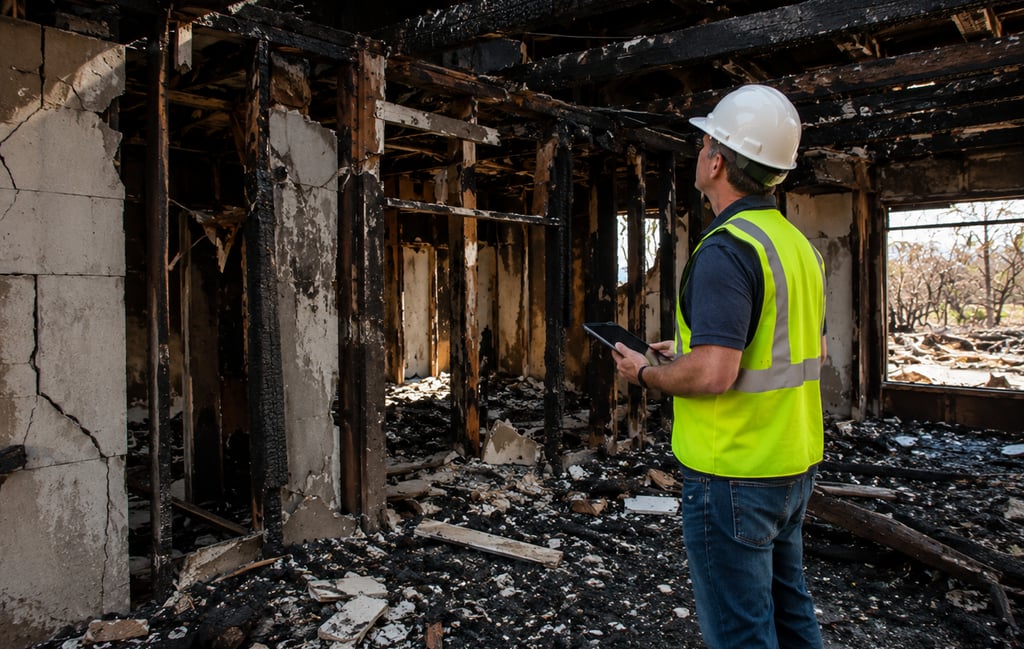
After a fire, the damage that can be seen is only part of the concern. Burned walls, smoke stains, broken windows, and collapsed materials are obvious signs of destruction. However, some of the most serious problems may be hidden inside the structure.
That is why a structural assessment is one of the most important steps after fire damage.
Fire can affect a building in different ways depending on the temperature, duration of exposure, type of construction, and materials used. Wood framing may be charred or weakened. Steel can lose strength or become distorted under high heat. Concrete may crack, spall, or lose integrity. Connections, anchors, fasteners, beams, columns, and load-bearing walls may also be compromised.
One of the biggest risks after a fire is assuming that a building is safe because it is still standing. A structure may look stable from the outside but have weakened components inside. Floors may no longer carry the same load. Roof framing may have been damaged by heat or firefighting efforts. Moisture from fire suppression can also create additional problems, including mold, corrosion, and deterioration.
A professional post-fire structural assessment helps determine whether the building can be safely repaired, partially rebuilt, or demolished. The assessment may include a review of the foundation, framing, roof system, walls, columns, beams, connections, and other critical components.
The process usually begins with a visual inspection. The professional looks for signs of cracking, warping, deflection, charring, smoke damage, heat distortion, water damage, and unsafe movement. In some cases, additional testing may be needed to determine the extent of damage below the surface.
The assessment should also consider hidden areas. Fire and heat can travel through wall cavities, attic spaces, ceiling areas, crawl spaces, and utility openings. Damage may exist behind finishes or in areas that are not immediately visible. This is why a thorough inspection is important before repairs begin.
Another key part of the assessment is determining what can be repaired and what must be replaced. Not every damaged component requires full replacement, but not every standing component is safe to keep. A qualified professional can help property owners make informed decisions and avoid unnecessary costs or unsafe repairs.
For insurance purposes, a structural assessment can also provide valuable documentation. A written report may help support claims, clarify the scope of damage, and guide the repair process. It can also help contractors prepare more accurate estimates and reduce confusion during reconstruction.
Property owners should avoid starting major repairs before the structure has been properly reviewed. Covering up damaged areas too quickly can make it harder to identify problems later. It can also lead to unsafe conditions or costly rework.
After fire damage, the question should never be, “Does the building look okay?” The better question is, “Has the building been properly assessed by a qualified professional?”
A fire-damaged building needs more than cleanup. It needs a careful evaluation of its structural condition, safety, and long-term reliability. A proper assessment helps protect lives, property, and the success of the rebuilding process.