
10 Things You Should Never Plug Into An Extension Cord
Lance Luke
7/9/20262 min read
In This Article
What Not To Plug Into An Extension Cord
Why To Avoid Plugging Heat-Generating Appliances Into Extension Cords
What Else Not To Do With Cords And Plugs
Other Extension Cord Considerations
For many homeowners and property managers, extension cords are a daily necessity. When an outlet isn't conveniently located near the device you need to run, reaching for an extension cord feels like the most natural solution. They provide the flexibility to power everything from temporary work lights during a remodel to a vacuum cleaner making its way down a long hallway.
However, extension cords are strictly designed to be a temporary bridge, not a permanent infrastructure solution. Improper use of electrical accessories is a leading cause of preventable residential hazards. To understand the safest practices for home electricity, we turned to Lance Luke, a forensic construction engineer and Principal of Construction Management Inspection (CMI), LLC. With over 45 years of experience in construction and building safety, he frequently consults on the structural and safety integrity of residential and commercial properties.
What Not To Plug Into An Extension Cord
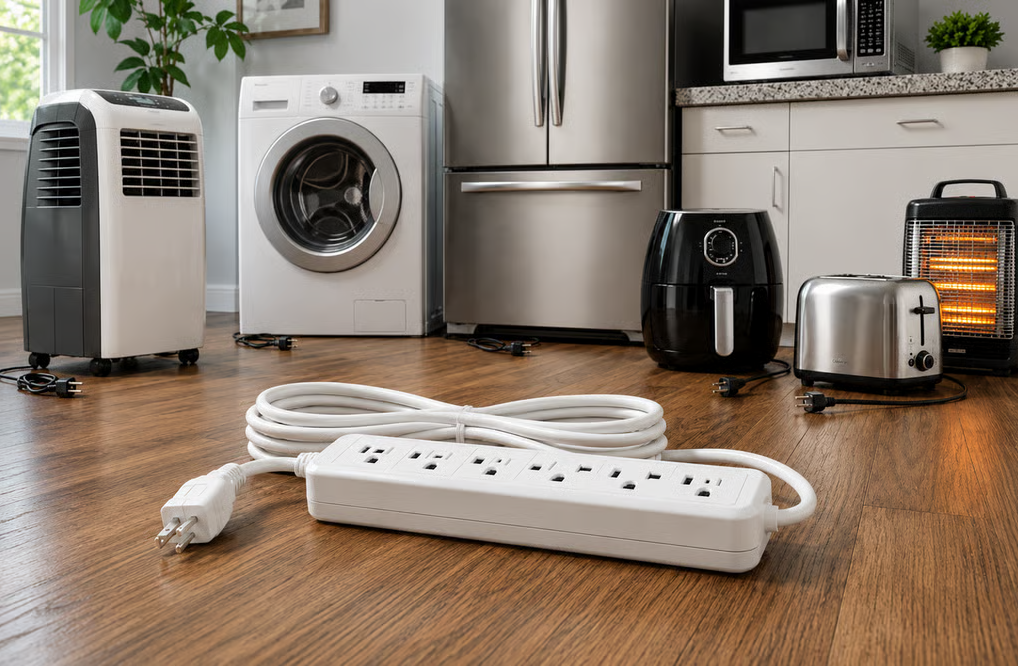
A good rule of thumb for household safety is evaluating how much power an appliance continuously draws. "As a building safety expert, I always advise clients that anything designed to continuously generate heat or run a heavy compressor must be plugged directly into a dedicated wall receptacle," says Luke.
Here are 10 common household items that should never be plugged into an extension cord:
Space heaters
Refrigerators
Microwaves
Window or portable air conditioners
Toasters
Air fryers
Dishwashers
Washing machines
Ovens and stoves
Sump pumps
Why To Avoid Plugging Heat-Generating Appliances Into Extension Cords
When you plug a high-wattage appliance into a standard extension cord, the appliance attempts to pull more current than the cord's gauge is rated to safely transport.
This electrical bottleneck causes the cord to rapidly heat up. Over time, this excess heat can melt the protective plastic insulation surrounding the wires, exposing the live electrical components. This sequence of events is exactly what leads to electrical shorts, property damage, and severe residential fires. Extension cords are perfectly fine for low-draw electronics like cell phone chargers, laptops, and LED lamps, but major appliances require the stable, direct current of a grounded wall outlet.
What Else Not To Do With Cords And Plugs
Even when using extension cords for low-wattage, safe devices, they should never be treated as a permanent fixture in your home.
"Relying on extension cords for daily, ongoing use significantly increases your safety risks," advises Luke. Once you are finished with a temporary task—such as running a power drill for a quick repair or using a shop vac—the cord should be unplugged, properly coiled, and stored away. Leaving them plugged in and stretched across rooms day after day not only presents a tripping hazard but leaves the cord vulnerable to being pinched under furniture or worn down by foot traffic, which degrades the wiring over time.
Other Extension Cord Considerations
Another major safety violation often seen in building inspections is the practice of "daisy-chaining"—plugging one extension cord or power strip into another to reach a further distance or create more outlets. This compounds electrical resistance and heavily increases the risk of an overload.
If you find yourself constantly relying on extension cords because your home lacks sufficient outlets, it is time to look at a permanent upgrade. Rather than taking on dangerous DIY electrical work, contact a licensed professional to install new wall receptacles exactly where you need them. Prioritizing building safety up front is always better than dealing with the catastrophic aftermath of an electrical failure.