
Why Your Hawaii Home Is Leaking During Storms (And Standard Inspectors Won't Catch It)
Lance Luke
6/17/20261 min read
When the next storm hits Hawaii, most homeowners grab buckets and call a roofer. But here's what they don't know: the roof is often not the problem.
The real culprit behind thousands of dollars in interior water damage is something standard home inspections rarely identify — blowback water intrusion caused by extreme pressure differentials and blocked drainage systems.
What Is Blowback Water Intrusion?
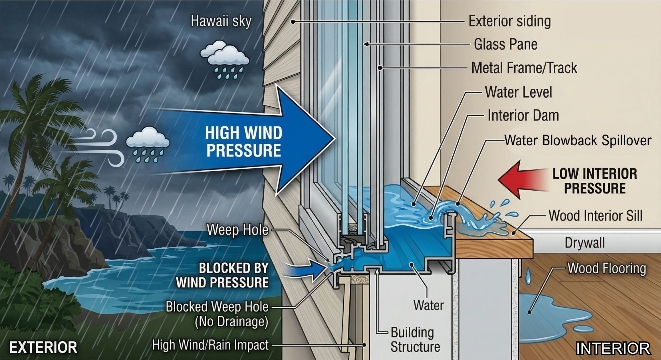
In Hawaii's high-wind, high-rain climate, exterior walls face intense pressure from driving rain. When your window or door weep holes are blocked — by debris, paint, or poor maintenance — water has nowhere to go.
The result? Water gets forced backward into your home.
Here's exactly how it happens:
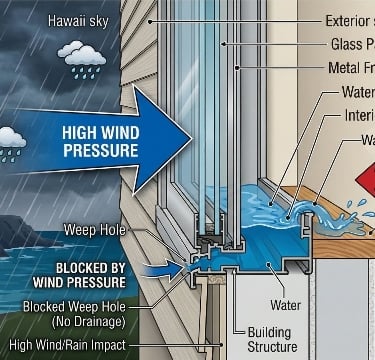
High exterior wind pressure meets low interior pressure. With blocked weep holes eliminating drainage, water spills over the interior dam, floods the wood sill, and seeps into drywall and flooring — often long before you ever notice a roof leak.
Why Standard Inspections Miss This
Most home inspectors follow a checklist: roof, gutters, visible plumbing. They don't measure pressure differentials. They don't test weep hole drainage under simulated wind-driven rain conditions. They don't inspect the interior window track for water staining that indicates blowback.
They look at the roof. The water is coming from the wall.
What CMI Does Differently
At Construction Management Inspection, LLC, our Hawaii-specific assessments include:
Weep hole functionality testing — not just visual inspection
Pressure differential analysis — identifying high-risk window and door configurations
Interior sill and track examination — catching early water staining before rot sets in
Drainage pathway mapping — ensuring water exits the building envelope, not your living room
Don't Wait for the Next Storm
If your home has experienced unexplained water staining, musty odors near windows, or warping around door frames, blowback intrusion may already be active.
Schedule a Hawaii-specific water intrusion assessment before the damage spreads.